Move to the Clairmont Hotel
Lost and FoundThe Move to the Clairmont Hotel is the decisive logistical and emotional turning point in Bethany and Ransom’s fake-couple arrangement. What begins as a practical response to the snowstorm becomes a staged domestic life in the center of the reunion, where a single bed, constant visibility, shared routines, and confidential access to Bethany’s work steadily narrow the distance between performance and reality.
Causes and Background
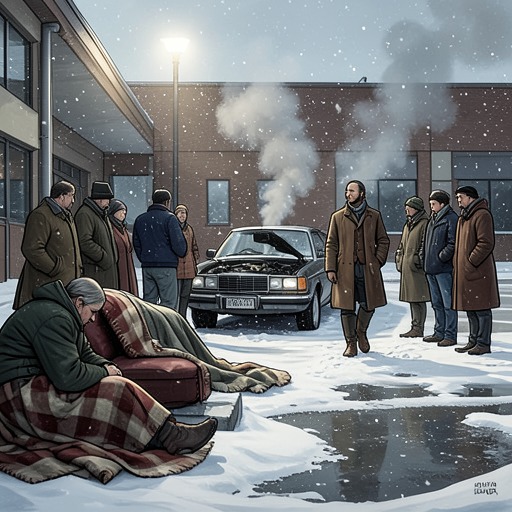
The move is made possible by a sudden change in the reunion’s circumstances. The class president announces that the National Weather Service expects heavy snow and extremely low temperatures through the weekend, with flights made dangerous, the airport snowed in, and roads out of town potentially blocked. Some events will be moved indoors, and attendees may be forced to remain for an extra day or two. Bethany is less alarmed than many of her classmates because she drove into town and can work from home, but the worsening cold makes remaining near the reunion’s center increasingly sensible.
The weather is only half the motive. Bethany wants Ransom’s role as her boyfriend to be convincing to the people most likely to gossip about her life, and she realizes that staying near classmates will give them more chances to see the couple together. Ransom proposes the Clairmont Hotel, where the major Sunday dance is scheduled and where several classmates and reunion organizers are likely to be staying. Bethany accepts because proximity will help her track changes to the program while allowing her to display the relationship she has constructed for the weekend.
The decision also develops from the bargain that brought Ransom into her life. At the Greenleaf Diner, he offered to pretend to be her boyfriend, even her husband, in exchange for secure access to files held by the agency where she works. Bethany knows that the arrangement involves confidential information and privately questions whether she has lost her mind by allowing a stranger into her parents’ house and offering him professional access. She nevertheless keeps the money she had set aside as a fallback, reasoning that she can pay him instead if he proves untrustworthy. The hotel move therefore carries an unresolved risk: it gives their performance greater credibility while placing Bethany’s trust, privacy, and employment in closer reach of Ransom’s undisclosed objective.
What Happens
Bethany and Ransom agree that a hotel room will make their relationship more visible than a stay at her parents’ house. Ransom checks that she is completely certain before proceeding, and Bethany chooses the Clairmont partly because two classmates are already entering the building. Their presence increases the pressure, but she believes she functions well under stress and decides that the extreme cold makes remaining at the center of the reunion preferable to driving back and forth.
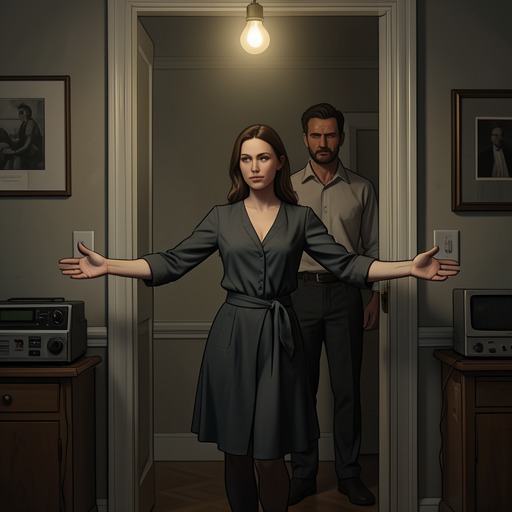
At the reception desk, Ransom draws Bethany close and presents them as a couple seeking a room for two. When the receptionist asks whether they want a king-sized bed or twin beds, he turns the choice into another piece of their public act. Bethany jokes about his snoring, while Ransom answers that they can push the beds together for everything else they have in mind. He selects a single bed because twin beds would invite questions from classmates who are supposed to believe that they are genuinely engaged.
The room immediately acquires a domestic quality that exceeds the formal terms of the transaction. Bethany removes her shoes, settles on the edge of the bed, and takes the remote while Ransom prepares to return for their belongings. Although he considers sleeping in the chairs for at least one night, the setting resembles a shared household more than a business arrangement between strangers. His promise not to snoop in her underwear drawer makes the boundary between playful intimacy and invasive curiosity visible rather than eliminating it.
The relocation also gives Ransom an opportunity that Bethany does not fully understand. After lending her his jacket, he goes back outside into the sharply falling temperature to retrieve their things and privately admits that he may inspect her room—not her underwear drawer, but whatever else might reveal something about her. His apparent attentiveness thus coexists with observation and calculation. The hotel is both a romantic stage for Bethany and an access point for Ransom’s investigation.
Privacy, Access, and Hidden Objectives
Ransom’s secret purpose becomes clearer once the couple is established at the hotel. He needs information available through Bethany’s agency because his personal project concerns himself, though he has not told her that. Ordinary methods have failed, and he believes the organization’s databases may supply the missing details about his past. The move creates a temporary isolation in which Bethany’s laptop, authorization, and passwords can be used with less immediate scrutiny.
Bethany eventually permits him to use her laptop and gives him credentials for two restricted systems: one concerning adopted children and another concerning parents who gave up children. She warns that the first login grants access only to the adopted-children database and that the second is limited to the parental records site; misuse could lock her out and force her to explain herself. Ransom promises that he is seeking only the information he has described. Once they part for the luau, however, he hurries to the room, opens Bethany’s laptop, and reaches the Children Served by Us database.
The first search exposes the personal stakes hidden inside the fake relationship. Ransom hesitates over whether to search under an adoptive name or a pre-adoption name, then enters Patrick Nolan, a name he stopped using roughly five years earlier. The database initially reports no result, but shortly afterward returns one result found. The hotel has therefore converted Bethany’s professional trust into a concrete opportunity for Ransom’s birth-parent search, while the reader sees that his willingness to play the ideal boyfriend was never purely commercial.
Consequences and Aftermath
The hotel’s central location intensifies the reunion performance. Ransom treats interaction with Bethany’s former friends as part of his job, signs them up for activities, and declares that his major task is to make sure his fake girlfriend has real fun. At breakfast, he pushes Bethany toward a demanding schedule that includes a school fun fair and hula lessons, while Jess encourages Bethany to participate. The public performance acquires momentum because Ransom is not merely standing beside her; he is actively shaping the version of herself she presents to the class.
That performance reaches its most conspicuous form at the Clairmont’s ballroom dance. Bethany and Ransom work the room, greet classmates, take pictures, and attract surprised looks. The dance is deliberately artificial—an adult reunion staged with the atmosphere of a prom—but the hotel makes the fiction socially legible. Their choice of a single bed, their physical closeness, and their visible participation in the weekend’s events all reinforce the story that they are an established couple.
The same confinement that makes the performance successful also accelerates intimacy. Bethany experiences the hotel arrangement as thrilling and domestic despite barely knowing Ransom, while Ransom uses the closeness to pursue information she has not been told he wants for himself. The hotel thus produces a double movement: it makes their public fiction more convincing and makes their private entanglement more difficult to separate from genuine attraction.
The stay is finally given a fixed limit when a class officer announces at the dance that the roads out have been cleared and the airfield is operating again. The reunion group will be able to leave on schedule the next day. The news resolves the logistical crisis but removes the accidental extension that had allowed Bethany and Ransom’s relationship to continue. Bethany joins the celebration while feeling more desolate, displays her ring, and tries to prolong the dance because ending the reunion means facing life without the pleasure and companionship Ransom has given her. The Clairmont Hotel therefore marks both the height of their pretend life and the moment when its expiration becomes unavoidable.